The term Naxalism derives its name from the village Naxalbari of West Bengal. It is originated as rebellion against local landlords who bashed a peasant over a land dispute. This rebellion was under the leadership of Kanu Santhal and Jagan Sanyal with an objective of rightful redistribution of the land to working peasants which was initiated in 1967.
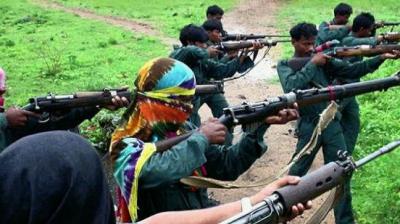
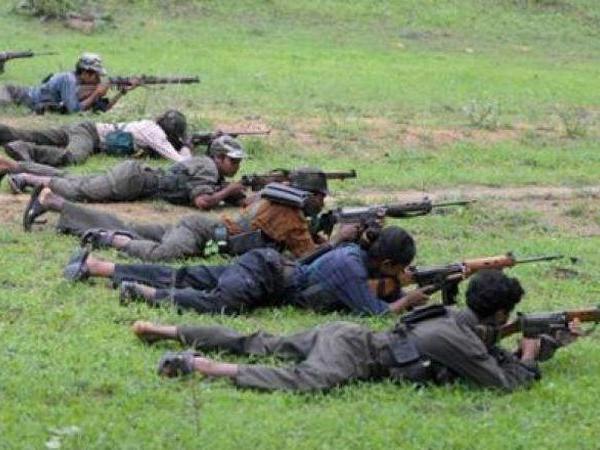
1. Mismanagement of Forests: It is one of the main reasons for the spread of Naxalism. It started with the British government. The monopolization of the forest started with the enactment of various forest laws. The integration with the wider world led to an influx of a new class like moneylenders. The administrative machinery became more exploitative and extortionate at functional level.
2. Tribal policies not implemented well: Even during the post Independence era, the government was not able to stop the process of the tribal alienation and their displacement caused by large projects. Even the issues of food security were not fully sorted out. Consequently, Naxalism made inroads in Orissa and other states.
3. The Growing inter and intra regional disparities: Naxalalism attract people who have poor livelihood like fishermen, farmers, daily labourers and bamboo cutters. The government policies have failed to stem the growing inter and intra regional disparities. The poor people think that Naxalism can provide solutions to their problems.
4. Absence of proper Industrialisation and lack of land reforms: The half-hearted implementation of land reforms by the government has yielded negative results. The agrarian set up has not been defined in the absence of proper implementation of survey and settlement. This further damaged the agriculture production and the rural economy. Absence of proper industrialization has failed to generate employment for rural people leading to dissatisfaction with the government. It is also one of the causes behind Naxalism.
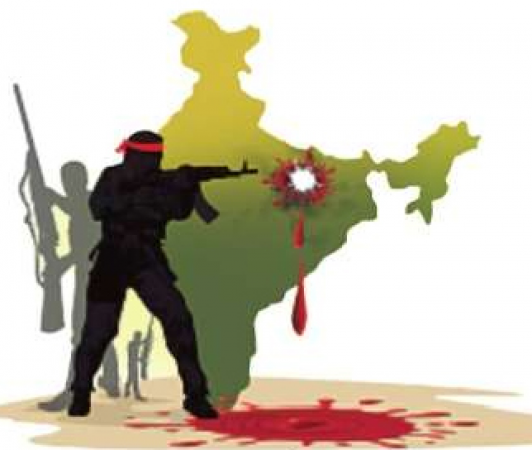
5.Naxalite movement as the biggest threat
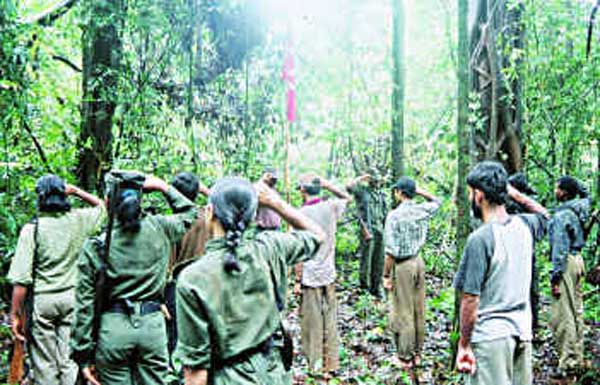
The Naxalite threat is the biggest security problem for India‟s future as its effects are multi-layered. The Maoist movement highlights India‟s interior weaknesses, which makes India also vulnerable to external threats. As part of globalization, threats such as the Naxalite movement can no longer be viewed as simply internal as it also affects external security. The security dangers are aptly described by a former Pakistani Director-General of the Inter-Services Intelligence and his description of India‟s foreign affairs. The Director-General equated India being busy with internal security problems to having two extra Divisions in the Pakistan Army for free. A nation cannot effectively withstand threats coming from outside its country if there is instability inside it. Furthermore, globalization has encouraged the emergence of non-state terrorist actors as well asinternational interference in each other‟s affairs. India has been one of the victims of international and state sponsored terrorism fuelled by fundamentalist ideologies.. India‟s regional neighbors are also external threats. For example, in 2004,the MHA was wary of the “symbiotic relationship” between the Communist Party of Nepal and Naxal groups in India. This means having military deployed along the border. In the past, India has also been involved in territorial disputes with China such as over Aksai Chin. Another reason why the Naxalites are the biggest threat to security is because of the way the issue affects India‟s economic development. This is apparent in several ways. For example, the more the Maoists concentrate on the poor and marginalized regions of India, the more economic development (which is imperative to improving those regions‟ conditions) will be hampered. Furthermore, the Naxalite rebels are no longer just focusing on remote jungles but on urban centers. Maoist leader Kishenji even declared that the group aims to establish an armed movement in Calcutta by 2011. Internal order and stability are necessary for a nation‟s economic development. For India to continue being able to withstand outside security threats, it must build up its infrastructure, its defence and its people. In terms of lifting its citizens out of poverty, India has a long way to go, and continued economic growth is integral to India‟s development as a strong global player. The Naxalite activities are using up scarce resources on defence and internal security when it should be spent on areas such as social development. For example in 2006, 22% of the total government expenditure is on the military, compared with a mere 1.84% of the Gross Domestic Product (GDP) spent on the social sector.
suggestions-
The complexity of the causes of the Naxalite problem as well as its implications both for internal and external security reflect a solution that is multi-dimensional and calls for a synergy between the central governments and the states. In order to comprehensively dissolve the Naxalite threat, the government has to address its root causes. Socio-economic alienation and the dissatisfaction with the widening economic and political inequality will not be solved by military force alone, which seems to be the main instrument employed by the government. The problem calls for a three-pronged solution: social and economic development, multi-lateral dialogue and military force. Socio-economic development:As the Naxalites are fuelled by discontent from the marginalizedand the poor, a larger percentage of the national budget must be allocated to addressing the needs of these regions. More of the national expenditure needs to be focused on developing these poorer regions through initiatives regarding health, education, social welfare and rural and urban development. Government service delivery should be improved in these tribal areas. Both state and government must ensure that things such as statutory minimum wages, access to land and water sources initiatives are implemented. In coming up with strategies for national economic growth, the government must always bear in mind the possible effects of fast growth for all socio-economic groups in a country as large and diverse as India. If the social needs ofthese marginalizedpeople are addressed, there will be no discontent to fuel the Naxalite‟s movements. Dialogue :Second, the government should initiate sincere dialogue with these marginalised groups, the Naxalites and state leaders. The popularity of Naxalites with the adivasis is a reflection of the fact that the government has been unaware or “unapologetically indifferent to their plight”. By communicating and starting a dialogue between these stakeholders, these groups will feel that they being listened to. By opening dialogue, the government can give opportunity for the rebels to join the mainstream by showing them that solutions can be created together with the government, by being part of the political system in a legitimate way. They no longerneed to resort to violence to get the state‟s attention. For example, the former director-general of AP concluded that as a result of the ceasefire and dialogue with Maoists in 2004, the violence in the state decreased by 80-90 percent in the region. As David Pilling noted, the challenge for India‟s leaders will be to allow the necessary development in these poverty-stricken areas while acknowledging the rights of a neglected indigenous group. Military:Currently, the main instrument employed by the government to address the Naxalite threat is the increasing use of the military. While some military force is still needed to combat against the Maoist guerrillas, it should not be the only solution. By only addressing the issue by brute force, government risks alienating civilians who are caught in the middle. Coercion of the state will only encourage people to rally against it. Governance:The growing Naxalite insurgency also reflects a flaw in the federal structure. Because law and order is seen as a state responsibility, the central government is unable to be implementinga coherent national strategy to address the threat. Ganguly notes that “in the absence of a near complete breakdown of public order or without the express request of the afflicted state, the central government cannot intervene.” The government has the overall responsibility of mobilizingdevelopment, but it cannot do sowithout the support of the states. The central government and the states need to cooperate together to solve the internal security threats and co-ordinate the implementation of this multi-dimensional approach. Both organizationsmust complement and support each other‟s initiatives and strategies.
Author-
Raman Tirpude
MBA,BE(student)
 raman's blog