The current craze for online education (OE) jogs my memory of the wall graffiti advertising sex clinics that are visible across urban north India. These ads promise guaranteed cures — shartiya ilaj — for all types of ailments and afflictions. Today, OE is being force-fed to Indian education as a miracle cure — in the least levels (school, college, university) and for all tasks (lectures, exams, admissions) — not just for pandemic conditions except for the longer term .
Readers may have already decided that I come to bury OE, to not praise it. they’re half right. i think that the incredible synergy unleashed by information and technology (ICT) is that the neatest thing to possess happened to education since the press . Indeed, education today is unthinkable without some sort of the pc and a few mode of digitised data transmission. As products of this revolution, online methods of teaching and learning deserve our highest praise — but only cast in their proper role, which is to supplement, support and amplify the techniques of face-to-face education. the instant they’re proposed as a substitute for the physical sites of learning we’ve long known — brick-and-cement schools, colleges, and universities — online modes must be resolutely resisted.
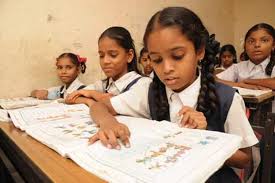
How does the standard student’s home (where most would access OE) compare with a typical TEI campus? Census 2011 tells us that 71 per cent of households with three or more members have dwellings with two rooms or less (74 per cent in rural and 64 per cent in urban areas). consistent with National Sample Survey data for 2017-18, only 42 per cent of urban and 15 per cent of rural households had internet access, and only 34 per cent of urban and 11 per cent of rural persons had used the web within the past 30 days. it’s true that a lot of TEIs (both public and private) have substandard infrastructure. But these data suggest that the bulk (roughly two-thirds) of scholars are likely to be worse off reception compared to any campus. The impact of smartphone capabilities and stability of net connectivity on OE pedagogy also must be examined.
But it’s as a social instead of physical space that the school or university campus plays a critical role. we’ve long ignored the vital role public educational institutions play as exemplary sites of social inclusion and relative equality. In Indian conditions, this role is arguably even more important than the scholastic role. Though many ugly blemishes remain, the general public institution remains the sole space where people of all genders, classes, castes, and communities can meet without one group being forced to bow to others. Whatever its impact on academics, this is often critical learning for all times . Women students, especially , are going to be much worse off if confined to their homes by OE.
Its unacceptability as a substitute doesn’t diminish the indispensable part that OE can play as a supplement to on-site education. It can use content and methods that are hard to incorporate within the normal curriculum. It can put pressure on lazy or incompetent teachers. It can provide hands-on experience in many technical fields where simulations are possible. And it can, of course, be a strong accessory for affluent students ready to afford expensive aids. But it’s fraudulent to suggest that OE can replace public education, the sole kind that the bulk can access.
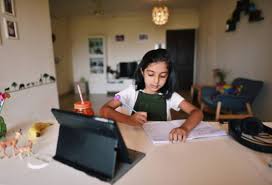
Such bluntness could seem unseemly. it’s necessary today when governments are using the duvet of the COVID-19 emergency to erupt regressive “reforms” — like anti-worker amendments to labour laws — that might face vocal opposition in normal times. during this context, there’s a true danger that OE is being groomed to play the role played by the “cashless economy” during the demonetisation crisis, but in reverse. The mirage of a cashless economy was a retrospectively invented justification for a catastrophic autocratic decision. OE might be the proactive computer virus smuggled in under pandemic conditions to abrogate the state’s commitments publicly education.
The best last-ditch argument for replacing TEIs with OE is to first undermine the previous to the purpose of collapse, then innocently means that, after all, OE is best than nothing. This cynical argument works as long as we are somehow persuaded to be complicit within the destruction of public education. Unless we resist such persuasion today, OE is strictly the type of “shartiya ilaj” that we could also be coerced into buying tomorrow.
Author-
Mr.Raman R Tirpude
BE,MBA(MArketing and HR)
Sub editor- YUVA weekly newspaper
Works as volunteer with Central Human Commission,New Delhi.
 raman's blog